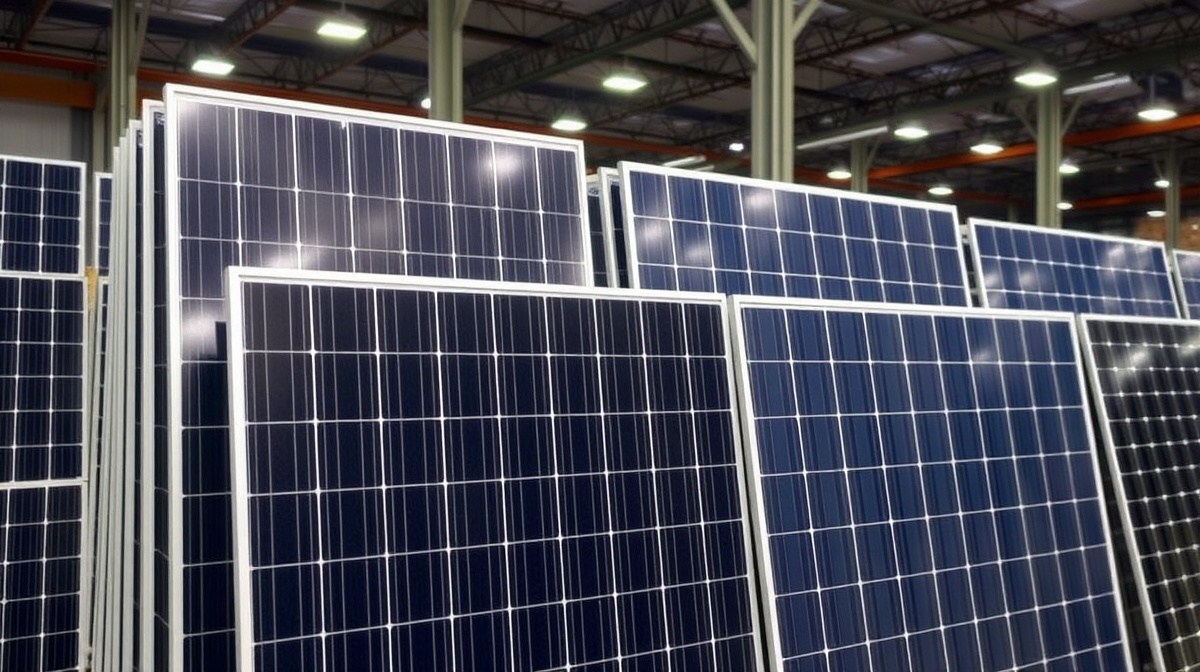
The Tier 1 Definition
"Tier 1" is not an official manufacturing standard, but rather a classification used by financial institutions and industry professionals to identify solar panel manufacturers that meet stringent criteria:
- Minimum 10 years of global production history
- Annual production capacity exceeding 500MW
- Strong balance sheet and financial stability
- Bankable warranty terms (manufacturer solvent enough to honor 25-year warranties)
- Consistent product quality and minimal defect rates
- Global supply chain and technical support infrastructure
Banks and institutional investors prefer Tier 1 panels because warranty claims are unlikely to be rejected due to manufacturer insolvency.
Tier 1 Manufacturers: Who Qualifies?
Examples of Tier 1 manufacturers include:
- Chinese manufacturers: JinkoSolar, Canadian Solar, Trina, LONGi, JA Solar
- European manufacturers: Hanwha SolarOne (Q Cells), SMA
- Japanese manufacturers: Panasonic
- American manufacturers: First Solar
- Indian manufacturers: Adani, Vikram Solar
Notably, many lower-cost brands from emerging manufacturers do not qualify as Tier 1, even if they offer competitive pricing.
Tier 1 vs Lower-Grade: Key Differences
Quality Control and Defect Rates
- Tier 1: Defect rates typically 0.05-0.1%
- Lower-grade: Defect rates can reach 1-3%
On a 100-panel installation, Tier 1 expects 0-1 defective units. Lower-grade might experience 1-3 failures, requiring warranty claims and replacement labor.
Warranty Terms and Bankability
- Tier 1: Standard 25-year performance warranty, manufacturer likely to honor claims
- Lower-grade: May offer 25-year warranty on paper, but manufacturer financial viability questionable
If a lower-grade manufacturer goes bankrupt after 5 years, warranty becomes worthless. This has happened multiple times with emerging panel manufacturers.
Performance Degradation
- Tier 1: Typical degradation 0.5-0.7% annually
- Lower-grade: Degradation can reach 1-2% annually or higher
Over 25 years: Tier 1 panel retains ~82% capacity. Lower-grade might retain 75% or less, significantly impacting system performance.
Temperature Coefficient
- Tier 1: Temperature coefficient typically -0.40% to -0.35% per °C
- Lower-grade: Can be as poor as -0.50% to -0.55% per °C
In South African heat (45°C+ panel temperatures), better temperature coefficients mean significantly higher output.
The Warranty Claims Problem
Scenario: Lower-Grade Panel Failure
A customer with lower-grade panels experiences output loss after 3 years. A Tier 1 panel would maintain 97%+ output. The lower-grade panel is at 92%, suggesting defect.
- Problem: Warranty claim filed with manufacturer
- Manufacturer response: "We are not the original supplier. Please contact your installer."
- Installer response: "We are out of business" (many small installers don't survive 5+ years)
- Customer recourse: None. Stuck with defective equipment
Tier 1 Advantage
With Tier 1 manufacturers:
- Manufacturer likely still in business and solvent
- Warranty claim honored directly with manufacturer
- Defect repairs or replacement units typically covered
- Customer recourse is real
Cost vs Value Analysis
Cost Comparison: 10kW System
Tier 1 Panels (JinkoSolar):
- Cost: R2.80-3.20 per watt
- 10kW system: R28,000-32,000
- Expected 25-year output: 82% capacity retention
Lower-Grade Panels (Unknown Chinese brand):
- Cost: R2.00-2.40 per watt
- 10kW system: R20,000-24,000
- Expected 25-year output: 75% capacity retention (estimate)
25-Year Performance Difference:
- Tier 1 total generation: ~246 MWh
- Lower-grade total generation: ~225 MWh
- Difference: 21 MWh (value: R63,000 @ R3/kWh)
- Cost premium: R4,000-8,000
- Value delivered: R63,000+ over system lifetime
Installer Reputation Impact
Using lower-grade panels puts your reputation at risk. If panels fail within first 5 years:
- Customer blames installer first
- Warranty claims are often denied
- Customer dissatisfaction and negative reviews inevitable
- Referral business decreases
Using Tier 1 panels:
- Defects are rare (0.05-0.1% failure rate)
- Warranty is honoreably covered if issues arise
- Customer satisfaction remains high
- Referral business increases significantly
Key Takeaways
- Tier 1 classification indicates manufacturer financial stability
- Warranty is only valuable if manufacturer exists 25 years from now
- Tier 1 panels have superior performance and minimal degradation
- Lower-grade savings (R4k-8k) pale vs 25-year performance loss (R63k+)
- Installer reputation depends on product quality and warranty reliability
- For commercial projects especially, Tier 1 is the only acceptable choice
For Installers
Tier 1 panels are an investment in your business reputation and customer satisfaction. The modest cost premium delivers massive value over 25 years and protects your installation's warranty integrity. This is especially critical for commercial installations funded by banks that require Tier 1 panels.
