Solar RMA Process South Africa: How to Document Faults, Serial Numbers and Installation Conditions
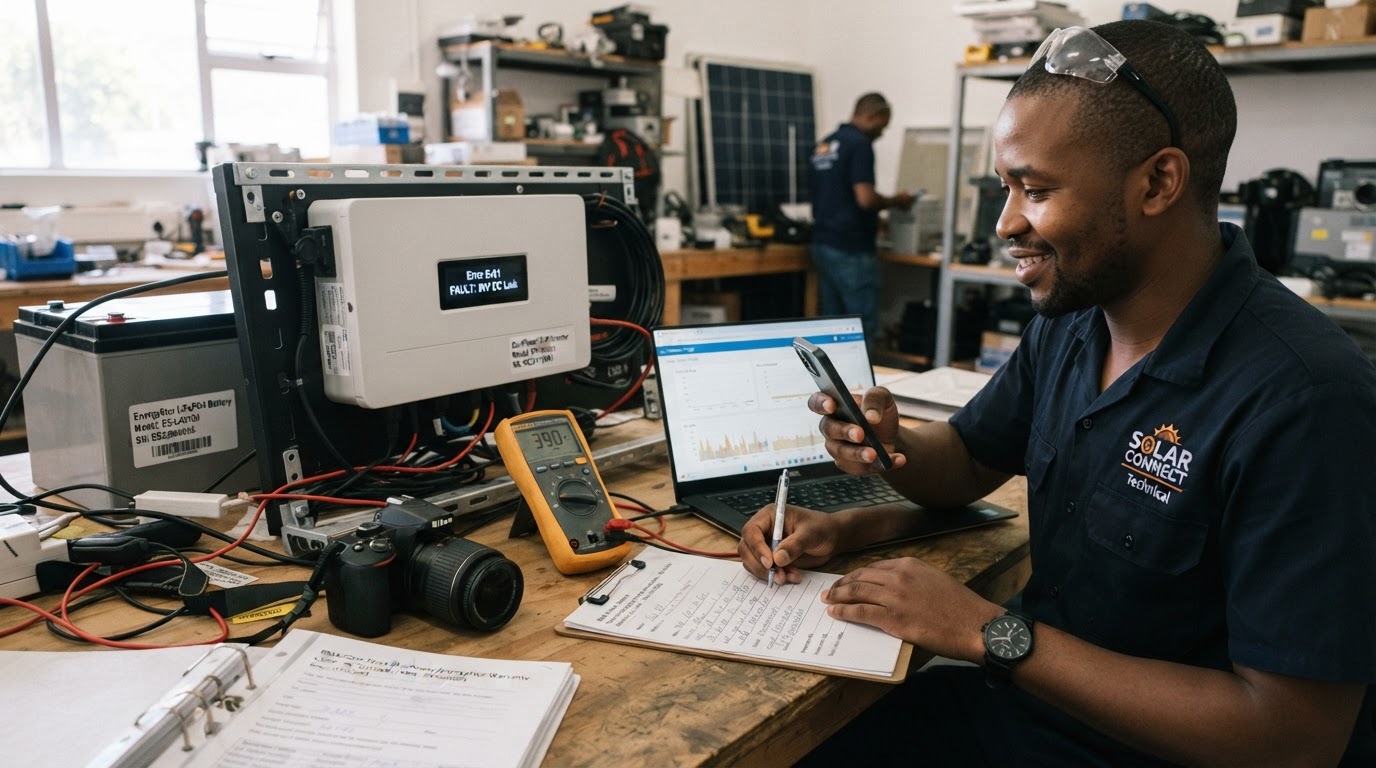
When solar equipment fails, a good RMA process can help installers resolve warranty claims faster and avoid unnecessary disputes with suppliers.
The key is simple: document the fault properly and provide clear evidence.
RMA Fundamentals — What Suppliers Need
Before requesting an RMA, collect:
- Customer and installation details
- Equipment model and serial number
- Purchase or invoice information
- Installation date
- Date the fault was reported
- Clear description of the problem
- Error codes or warning messages
- Photos and videos
- Monitoring logs
- Commissioning information
- Troubleshooting already completed
Always record the supplier's RMA reference number and keep all communication in the job file.
Fault Replication — Prove the Problem
Avoid descriptions such as "the inverter is not working."
Instead, explain exactly what happens.
For example:
Where possible, record:
- Error codes
- Inverter readings
- Battery status
- Grid voltage
- PV voltage
- Monitoring-platform information
- Fault history
Take photos or videos before resetting, dismantling or changing equipment.
Build an Evidence Pack
A simple RMA evidence pack should include:
Equipment Information
- Manufacturer and model
- Serial number
- Installation date
- Supplier and invoice reference
Installation Evidence
- Inverter and battery photos
- PV array photos
- Distribution board
- Isolators and protection
- Cable connections
- Labels
- Installation environment
Fault Evidence
- Error messages
- Photos and videos
- System logs
- Test results
- Troubleshooting notes
Timeline
Record when:
- The customer reported the fault.
- The installer investigated it.
- The supplier was contacted.
- The RMA was submitted.
- Additional information was requested.
- The equipment was repaired or replaced.
This makes it easier to track supplier RMA timelines.
Battery RMA Documentation
For battery claims, also record:
- Battery model and serial number
- State of charge
- Battery voltage
- Temperature
- Communication status
- Battery alarms
- Number of modules
- Relevant inverter settings
- Installation conditions
If there is physical damage, photograph it before moving or dismantling the equipment. Safety should always come first.
Manage the Customer During the RMA
Warranty claims can take time. Keep the customer informed about:
- What has failed
- What has been tested
- What has been submitted to the supplier
- What the supplier is waiting for
- Expected next steps
- Available temporary solutions
Do not promise a replacement date until the supplier has confirmed it.
Use a Standard RMA Checklist
Before submitting an RMA, check:
- ☐ Serial number recorded
- ☐ Fault clearly described
- ☐ Error codes recorded
- ☐ Photos and videos taken
- ☐ Monitoring logs saved
- ☐ Commissioning information available
- ☐ Installation conditions documented
- ☐ Troubleshooting recorded
- ☐ Supplier RMA reference saved
- ☐ Customer updated
Conclusion
A successful solar RMA process in South Africa depends on good documentation.
Record the serial number, fault, installation conditions, commissioning information, photos, test results and communication history.
Doing this from the start can reduce supplier pushback, speed up warranty claims and give installers a clear record if a dispute arises.
For more information on installation and compliance documentation, see the relevant B12 resources and your project documentation requirements.
Back to Blog