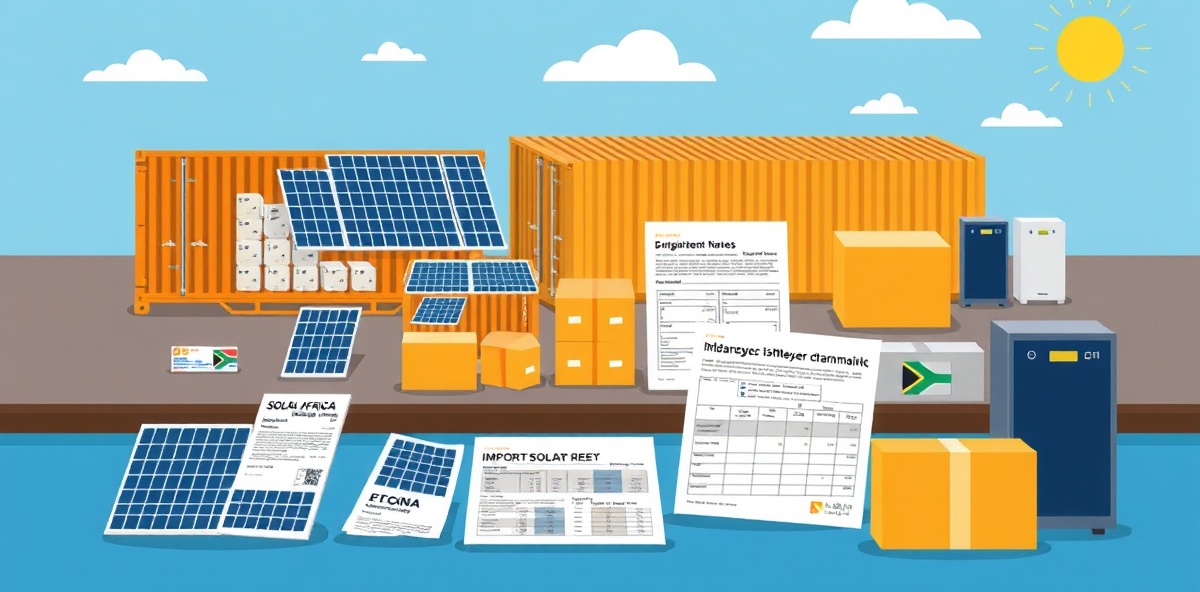
Understanding import duty and VAT is essential for accurate pricing and compliance in South Africa's solar industry. Getting this wrong can quickly erode margins and delay projects.
1. Import duties and landed cost — avoid "surprise" add-ons
Your true equipment cost is more than the supplier price. Always calculate landed cost, including:
- Supplier price (FOB)
- Freight & insurance
- Import duty (e.g. 10% on certain panels)
- Clearing and port charges
- Exchange rate impact
- VAT (15%) on total landed value
Common Mistake:
Quoting without confirming if prices are duty-paid (DDP) or not.
Tip:
Always confirm duty inclusion and HS code classification with suppliers.
2. VAT basics for installers — invoice correctly or lose claims
You must charge 15% VAT on all installations and equipment. To claim input VAT, you need:
- Valid tax invoices
- Bill of Entry (for imports)
- Proof of payment
Common mistakes:
- Claiming VAT without proper documents
- Using proforma invoices
- Poor record-keeping
Tip:
Keep all VAT documents in your project file.
3. Quote validity and price adjustments — protect your margin
Import costs can change due to:
- Exchange rates
- Shipping costs
- Duty changes
Best practice:
- Limit quote validity (7–14 days)
- Add a price adjustment clause
Example:
"Pricing is based on current exchange rates and import costs. Changes may result in price adjustments before order confirmation."
4. Compliance paperwork checklist — don't skip this
Request these from suppliers/importers:
1. Core documents:
- Commercial invoice
- Packing list
- Bill of Entry
- Bill of Lading
- Proof of duty payment
2. Compliance:
- NRCS approvals (where required)
- Test certificates (IEC)
3. VAT:
- Valid tax invoices
- Supplier VAT details
Tip:
Standardise this as part of your procurement process.
5. Bottom line
To stay profitable and compliant:
- Calculate full landed cost
- Apply VAT correctly
- Use protected quotes
- Keep complete documentation
In solar, pricing accuracy = profit protection.
6. Conclusion
Know your landed costs before you quote, maintain proper documentation for SARS compliance, and partner with trusted suppliers to protect your margins. Get this right, and you'll have the profitability and compliance edge needed to succeed in South Africa's growing solar market.
