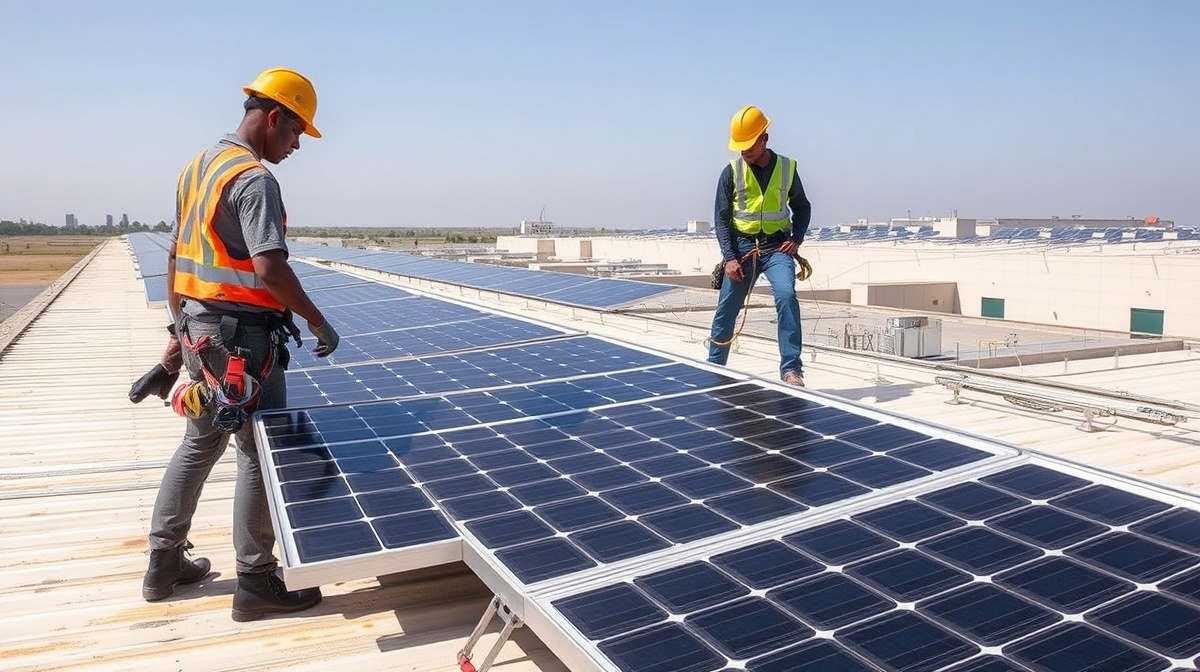
The Growth Opportunity
South Africa's solar market is expanding 30-40% annually. Small installers growing at market rate are leaving money on the table. Strategic growth can deliver 2-3x faster expansion.
The key is positioning yourself for scale before competition intensifies. Successful installers focus on business systems, quality partnerships, and operational efficiency—not just installation quality alone.
Stage 1: Foundation Building (Years 1-2)
Establish Quality and Reputation
- Complete installations on time and within budget
- Use only Tier 1 equipment—your reputation depends on product quality
- Invest in technical training and certifications
- Build strong customer relationships with follow-up support
- Gather testimonials and case studies from early projects
Build Your First Distributor Relationship
Partner with one reliable distributor to:
- Simplify supply chain management
- Build relationship and negotiating leverage
- Understand equipment quality and support
- Access early bulk discount opportunities
Documentation and Compliance
- Obtain ECSA registration if doing electrical work
- Have liability insurance and warranties documented
- Create system design templates for faster quoting
- Build financial tracking for profitability analysis
Stage 2: Scale and Systematize (Years 2-4)
Develop Recurring Revenue Streams
Beyond one-time installation profits:
- Maintenance contracts: Monthly/annual monitoring and maintenance service
- System optimization: Quarterly reviews and performance optimization
- Battery management: Subscription service for battery health monitoring
- Equipment upgrades: Sell additional modules, batteries, or monitoring gear
Recurring revenue creates predictable income and higher business valuation.
Negotiate Bulk Purchasing Agreements
Once you're installing 50+ systems annually:
- Negotiate volume discounts (5-15% possible with committed volumes)
- Establish account-specific pricing tiers
- Negotiate payment terms (Net 30 instead of cash on delivery)
- Request priority access to allocation-constrained products
- Seek co-marketing opportunities with distributor
Build Your Team
Hiring enables exponential growth:
- Hire experienced installers to handle more projects simultaneously
- Bring on project manager to coordinate scheduling and logistics
- Add administrative support for quoting and customer communication
- Train team on company standards and quality processes
Stage 3: Strategic Partnerships and Expansion (Years 4+)
Multi-Distributor Strategy
Reduce supply chain risk and improve negotiating position:
- Partner with 2-3 major distributors for competitive bidding
- Play distributors against each other for better pricing on key items
- Diversify supplier for supply chain resilience
- Maintain flexibility to switch distributors if service declines
Specialize or Diversify?
Specialization Strategy: Focus on one segment (e.g., commercial solar). Become the "go-to" expert. Higher margins, repeat business from referrals.
Diversification Strategy: Serve residential, commercial, and industrial. More projects, less boom/bust cycles. Requires broader expertise.
Develop Value-Added Services
- Energy consulting: Help customers optimize energy usage and design
- Financing assistance: Partner with banks/ESCOs to help customers finance
- Monitoring platform: Own customer data with custom monitoring/reporting
- Warranty services: Offer extended or supplemental warranties
Business Model Benchmarks
Financial Targets by Stage
Stage 1: Solo Installer (Years 1-2)
- Projects/year: 10-15
- Average project size: 5-8kW
- Average installation margin: 15-20%
- Annual revenue: R1.5-2.5M
- Annual profit: R250-500K
Stage 2: Small Team (Years 2-4)
- Projects/year: 40-60
- Average project size: 8-12kW (mix of residential and commercial)
- Average installation margin: 18-22%
- Recurring revenue: R200-400K annually (maintenance contracts)
- Annual revenue: R6-10M
- Annual profit: R900K-1.5M
Stage 3: Established Business (Years 4+)
- Projects/year: 100+
- Average project size: 12-50kW (commercial focus)
- Average installation margin: 20-25% (due to scale and bulk discounts)
- Recurring revenue: R1-2M annually (growing maintenance portfolio)
- Annual revenue: R15-30M
- Annual profit: R2-4M+
Competitive Advantages for Growth
1. Build Customer Moat Through Service
Maintain higher-than-market service standards:
- 24-hour emergency support (important during load shedding)
- Quarterly system health checks (even for non-contracted customers)
- Proactive communication about system status and optimizations
- Software portal for customers to monitor their systems
2. Develop Reputation in Niche Segment
Become known for specific expertise:
- "Best hybrid solar + battery systems in Cape Town"
- "Commercial load shedding solution expert"
- "Smallest payback period—guaranteed ROI"
3. Leverage Technology for Efficiency
- Use design software to reduce quoting time from days to hours
- Implement CRM to track customer pipeline and referrals
- Use project management software for scheduling and logistics
- Automate invoicing and financial tracking
Key Takeaways
- Growth requires business systems, not just technical skills
- Build strong distributor partnerships early and negotiate scale advantages
- Develop recurring revenue through maintenance contracts and services
- Hire and train team to multiply your capacity
- Specialize or diversify strategically based on market opportunity
- Use technology to increase efficiency and free capacity for growth
- South Africa's solar boom is accelerating—the time to scale is now
For Growing Installers
The solar market opportunity in South Africa is one of the largest in the region. Installers who focus on quality, build strong distributor partnerships, develop recurring revenue, and systemize their operations will thrive during this boom period. Your growth trajectory is not limited by market demand—it's limited by your operational capacity and strategic vision.
