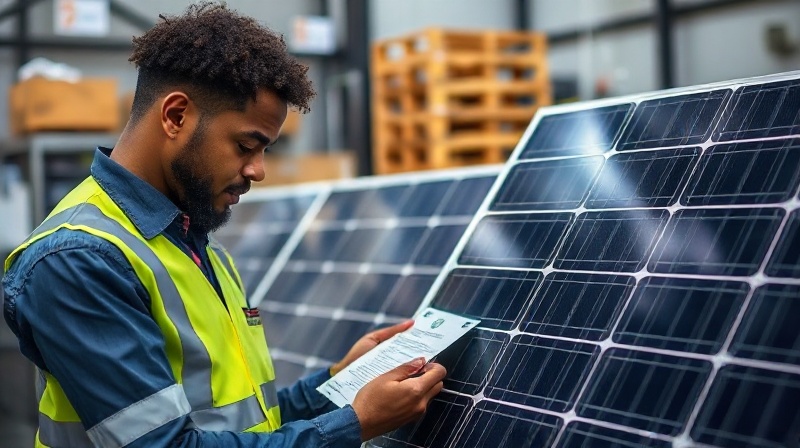
Why Counterfeit Happens – Demand Spikes and Grey Supply Chains
Counterfeit solar equipment often appears when demand is high and stock is limited.
When popular products run short, some suppliers offer quick availability or unusually low prices. This creates space for grey-market or fake products to enter the supply chain.
Common examples include:
- Fake solar panel labels
- Cloned serial numbers
- Counterfeit inverter branding
- Repackaged used equipment sold as new
- False warranty documents
- Unauthorised imports
While cheaper prices may seem attractive, counterfeit products often lead to higher long-term costs through failures, replacements, and customer complaints.
Verification Checklist – Labels, Serials, Paperwork and Warranty Registration
Before accepting or installing solar equipment, always complete basic verification checks.
Check Product Labels
Inspect for:
- Correct branding
- Clear model numbers
- Professional print quality
- No signs of tampering
Poor-quality labels are a common red flag.
Verify Serial Numbers
Serial numbers should always be checked.
Installers should:
- Match serial numbers on packaging and product
- Record all serial numbers
- Verify with the manufacturer where possible
Duplicate or invalid serial numbers should be treated as high risk.
Review Documentation
Request:
- Datasheets
- Warranty certificates
- Tax invoices
- Compliance documents
All paperwork must match the exact product supplied.
Register Warranties
Register products immediately upon receipt to confirm authenticity and secure warranty coverage.
Photograph Deliveries
Keep records of:
- Packaging
- Serial labels
- Delivery notes
This helps with traceability and dispute resolution.
Procurement Controls – Buy from Vetted Suppliers
Strong procurement processes are the best protection against counterfeit solar equipment.
Use Approved Suppliers
Only buy from suppliers that are:
- Verified and reputable
- Established in the market
- Able to provide warranty support
Avoid unknown or informal sellers.
Confirm Authorised Distributor Status
Where possible, purchase from authorised solar distributors in South Africa. This ensures:
- Genuine products
- Manufacturer-backed warranties
- Proper support channels
Maintain Procurement Records
Keep:
- Quotes
- Purchase orders
- Invoices
- Delivery documents
Good records improve accountability and traceability.
Inspect Products on Arrival
Check every delivery for:
- Packaging condition
- Correct quantities
- Serial number consistency
- Physical damage
Do not accept stock without inspection.
The Cost of Counterfeit Solar Equipment
Fake or substandard solar equipment can be more expensive than it appears.
Risks include:
- Equipment failure
- Replacement costs
- Extra labour
- Warranty rejection
- Project delays
- Customer dissatisfaction
- Reputational damage
A single faulty installation can erase any savings from cheaper procurement.
What to Do if You Suspect Counterfeit Equipment
If you suspect fake or suspicious products, act immediately.
Quarantine the Stock
Do not install or resell the equipment. Isolate it immediately.
Gather Evidence
Collect:
- Photos
- Serial numbers
- Packaging details
- Purchase documents
Contact the Manufacturer
Request verification using serial numbers and product details.
Notify the Supplier
Request written clarification and supporting documents.
Assess Customer Impact
If already installed:
- Identify affected systems
- Monitor performance
- Plan corrective action
Escalate if Necessary
In serious cases, involve insurers, legal advisors, or relevant authorities.
Conclusion
Counterfeit solar panels and fake inverters are a real risk in South Africa's growing solar industry. However, installers can significantly reduce exposure by working with trusted suppliers, verifying serial numbers, checking documentation, and maintaining strong procurement controls.
A disciplined verification process protects customers, reduces financial risk, and strengthens long-term business reputation. In solar installations, quality control is not optional—it is essential for sustainable success.
Related Resources
For more information on solar compliance and equipment verification, explore these related articles:
